
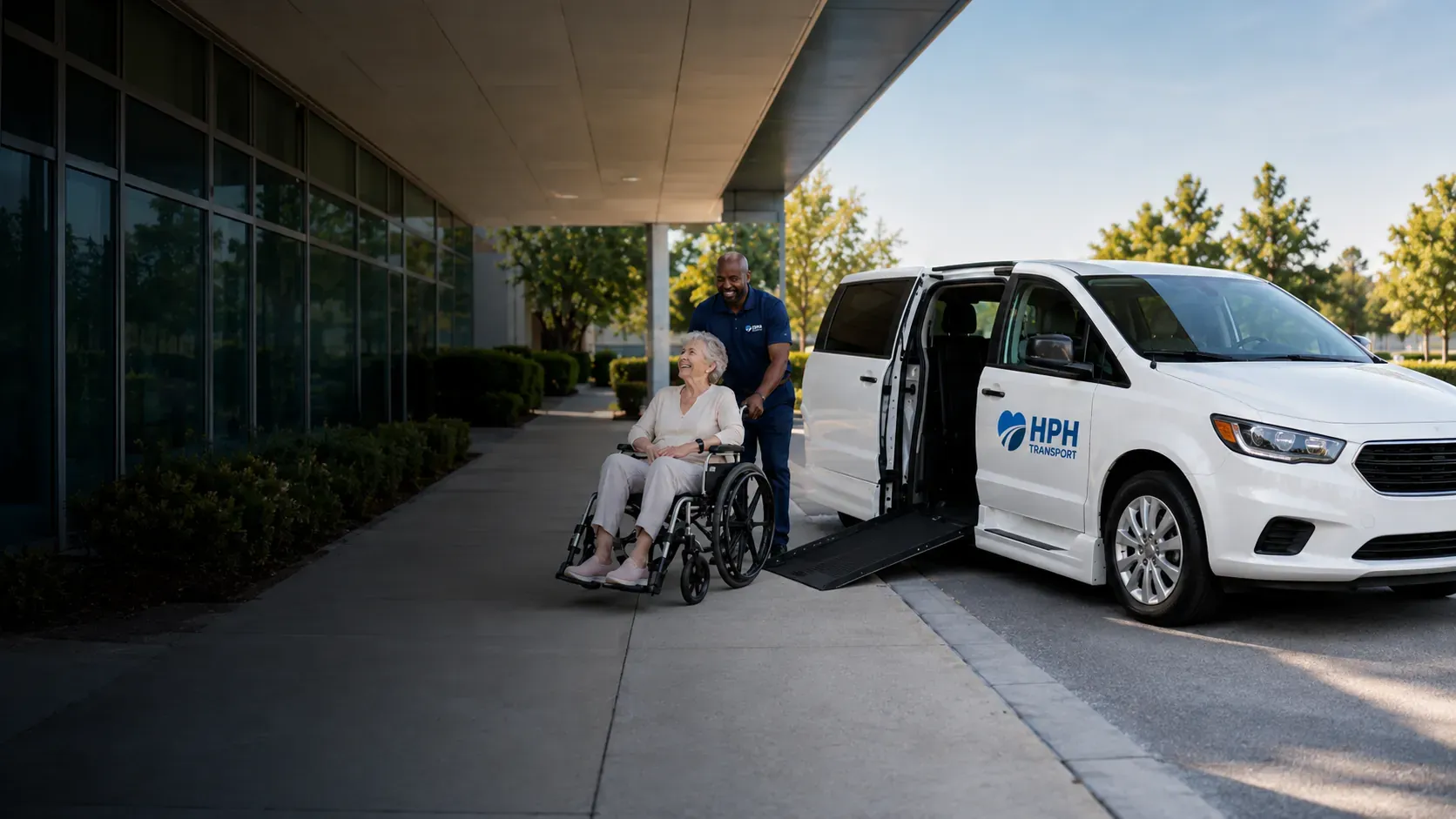
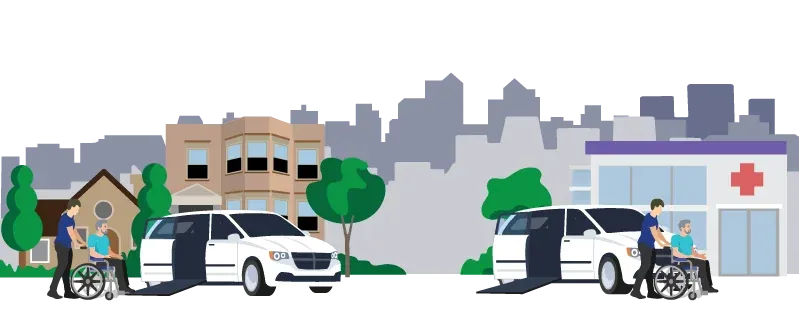
Non-emergency medical transportation (NEMT) is scheduled transportation for patients who need help getting to and from medical care but do not need an ambulance. For hospitals, clinics and behavioral health providers, NEMT is also an operational tool: when patients can reliably get to their appointments, fewer visits are missed, discharges move faster and care stays on track.
This guide explains what NEMT is, who uses it, how it benefits patients and healthcare organizations, and what to look for in an NEMT partner.
What Is Non-Emergency Medical Transportation (NEMT)?
NEMT serves patients who cannot drive themselves, do not have reliable transportation, or need physical assistance during the trip, but whose condition is stable and does not require medical care on the way.
Unlike ride-share or public transit, NEMT is built for healthcare. Drivers are trained to assist patients, vehicles can accommodate wheelchairs and other mobility devices, and trips are scheduled around appointments rather than on demand from the street.
Common NEMT trips include:
- Primary care and specialist appointments
- Dialysis and other recurring treatments
- Behavioral health programs, including IOP and PHP
- Hospital discharges and follow-up visits
- Transfers between approved care settings
NEMT vs. Emergency Medical Transportation
Ambulance services provide medical care during transport for patients in urgent or unstable condition. NEMT is for patients who are medically stable and need a safe, assisted ride, not clinical treatment on the way. Using NEMT for these trips keeps ambulances available for emergencies and avoids a more costly level of transport.
Who Uses NEMT Services?
Older Adults
Mobility limitations, vision changes or medical conditions can make driving unsafe. NEMT helps older adults keep up with routine and preventive care.
Patients With Disabilities or Limited Mobility
Wheelchair users, patients with walkers and people recovering from surgery often need ADA-accessible vehicles and hands-on help getting in and out of the vehicle.
Behavioral Health Patients
Treatment works best when patients attend consistently. Reliable behavioral health transportation helps patients get to therapy, IOP and PHP sessions without interruption.
Patients Being Discharged
Some patients have no safe way home after a hospital stay or outpatient procedure. Hospital discharge transportation gets them home or to an assisted living facility safely.
Rural and Underserved Communities
Long distances and limited public transit make it harder to reach care. Rural transportation programs help close that gap.
Why Is NEMT Beneficial?
Transportation is one of the most common reasons patients delay or miss care. An estimated 5.8 million people in the U.S. delayed medical care in 2017 because they did not have transportation (Wolfe, McDonald and Holmes, American Journal of Public Health, 2020).
Fewer Missed Appointments
When patients have a confirmed ride, they are more likely to arrive on time. That means fewer no-shows, fewer gaps in the schedule and less time spent rebooking.
Better Continuity of Care
Chronic conditions and recovery plans depend on regular follow-up. Consistent transportation helps patients keep those appointments and stay on their treatment plans.
Faster, Smoother Discharges
When a discharged patient has no ride home, the bed stays occupied. Coordinated discharge transportation helps free up beds sooner and keeps patient flow moving.
A Better Patient Experience
A safe, courteous ride reduces stress before and after a visit. Patients feel supported beyond the walls of the facility, which reinforces trust in their care team.
Transportation as a Social Determinant of Health
Transportation is recognized as a social determinant of health: a non-medical factor that directly affects outcomes. Without reliable transportation, patients are more likely to postpone care, skip preventive services and rely on emergency departments for issues that could have been handled earlier.
How NEMT Benefits Hospitals and Clinics
For healthcare organizations, a well-run NEMT program supports both patients and operations:
- Protects schedules and revenue by reducing no-shows and late arrivals.
- Saves staff time that would otherwise go to arranging rides one patient at a time.
- Improves patient throughput, especially at discharge.
- Removes the burden of running an in-house fleet, including hiring, training and managing drivers and vehicles.
What to Look for in an NEMT Provider
Not all medical transportation services are built for healthcare operations. When evaluating a partner, look for:
- Dedicated, consistent drivers who learn your facilities, entrances and staff contacts.
- Healthcare-focused driver training, including patient assistance and wheelchair securement (safety and driver training).
- ADA-accessible vehicles matched to your patient population.
- Direct scheduling and communication with your team instead of a third-party call center.
- Real-time GPS tracking for visibility into active trips.
- Performance reporting to support planning and resource decisions.
How HPH Transport Supports Healthcare Organizations
HPH Transport, part of HealthPark Hospitality, builds dedicated non-emergency medical transportation programs for hospitals, clinics and healthcare facilities. Each program is designed around your patients, appointment schedules, accessibility needs and service area.
Our process has four steps:
- Assessment: review patient volume, appointment patterns, service area and transportation needs.
- Program design: define coverage, vehicles, routes, schedules and service requirements.
- Implementation: assign dedicated drivers and vehicles and set up workflows with your team.
- Optimization: review schedules, vehicle use and staffing as your needs change.
Learn more about our dedicated patient transportation programs, or request a proposal to discuss your facility’s needs.
Patients: to arrange transportation, please contact your healthcare provider directly.
Frequently Asked Questions About NEMT
What does NEMT stand for?
NEMT stands for non-emergency medical transportation: scheduled, assisted transportation to and from medical care for patients who do not need an ambulance.
What is the difference between NEMT and an ambulance?
An ambulance provides medical care during transport for urgent or unstable patients. NEMT is for medically stable patients who need a safe ride and physical assistance, not treatment on the way.
Can NEMT vehicles transport wheelchair users?
Yes. NEMT programs use ADA-accessible vehicles, and drivers are trained to assist and secure passengers who use wheelchairs, walkers and other mobility devices.
How does a hospital or clinic set up an NEMT program with HPH Transport?
HPH starts with an assessment of your patient volume, appointment patterns and service area, then designs a program with dedicated drivers, vehicles and schedules. Request a proposal to get started.
How do patients book a ride with HPH Transport?
HPH Transport works directly with healthcare organizations. Patients should contact their healthcare provider to arrange transportation.