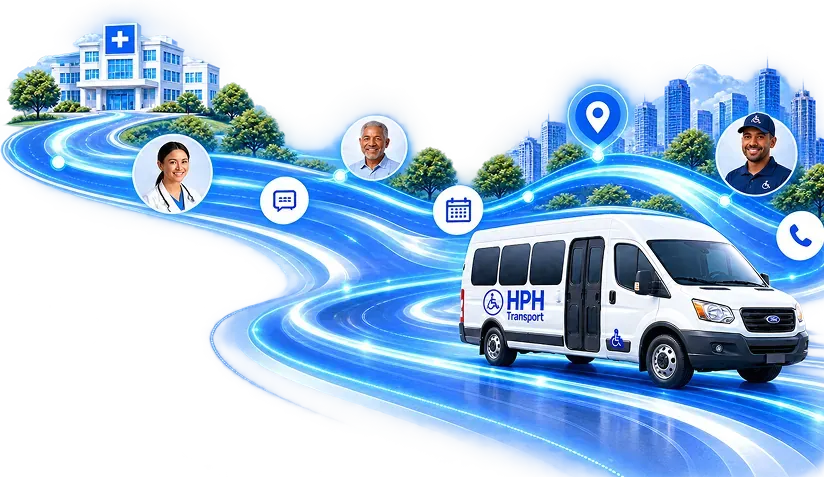
Dedicated Drivers

Consistently assigned drivers learn your facilities, service areas, schedules, and staff contacts.
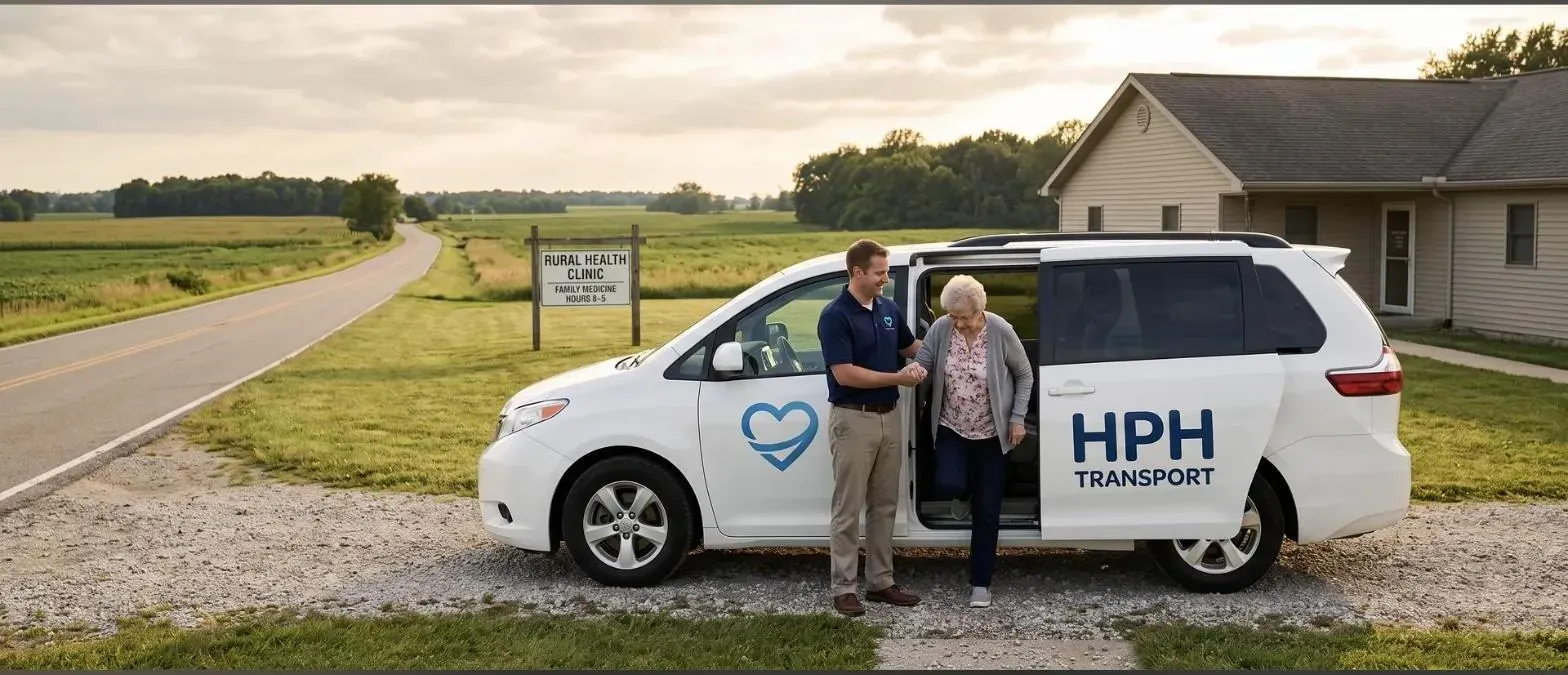
Dedicated Transportation for Rural Healthcare Communities
Long distances and limited transportation options can make accessing healthcare more difficult for rural patients. HPH builds dedicated transportation programs around healthcare facilities, patient schedules, service areas, accessibility needs, and transportation demand.
HPH helps keep rural transportation consistent across longer distances, recurring care, accessibility needs, and changing schedules.
Consistently assigned drivers learn your facilities, service areas, schedules, and staff contacts.

Transportation is organized around appointment patterns, recurring treatment, travel distances, and patient demand.

Vehicle options can support passengers with mobility and accessibility needs.

Healthcare teams communicate directly with HPH when schedules or transportation needs change.

HPH monitors active transportation to support greater operational visibility.

Help patients reach appointments and treatment when transportation options are limited.

Consistent transportation can support recurring treatment and follow-up care.

HPH manages transportation operations so healthcare teams spend less time arranging individual rides.

Dedicated drivers and established procedures make transportation more predictable for patients and staff.
Review patient volume, service area, travel patterns, accessibility needs, and transportation challenges.
Customize drivers, vehicles, schedules, routes, communication, and reporting.
Deploy transportation resources and establish operating procedures.
Review transportation activity and adjust routes, schedules, staffing, and vehicle use as demand changes.
Rural patient transportation helps healthcare organizations address transportation needs in communities where distance or limited transportation availability can make accessing care more difficult.
Transportation can be organized around recurring treatment, appointment patterns, and follow-up care across the service area.
Programs can be built around multiple facilities, service areas, and the communities your patients travel from.
Vehicle options can support passengers with mobility and accessibility needs, including wheelchairs, walkers, and other mobility devices.
HPH provides non-emergency transportation arranged through healthcare organizations for scheduled and recurring care.