
Accessible Vehicles

Vehicle options can support passengers with mobility and accessibility needs.
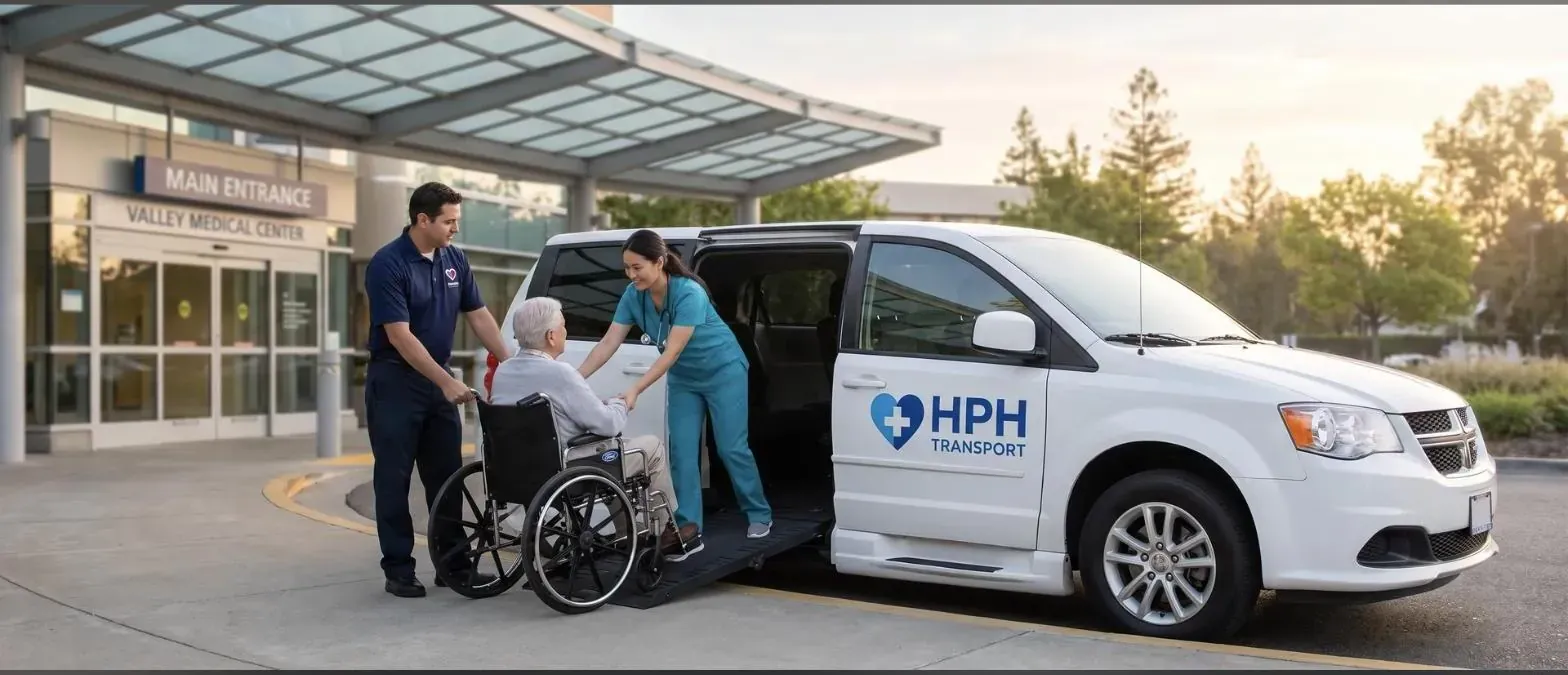
Coordinated Non-Emergency Transportation Between Care Settings
HPH provides inpatient transfer transportation for healthcare organizations coordinating movement between approved facilities and care settings.
Programs are built around transportation schedules, patient needs, accessibility requirements, facility procedures, and direct healthcare coordination.
HPH helps keep inpatient transfers coordinated across facilities, schedules, accessibility needs, and changing transfer times.
Vehicle options can support passengers with mobility and accessibility needs.

Consistently assigned drivers learn your facilities, transfer locations, workflows, and staff contacts.

Transportation can be coordinated around planned transfers and changing transfer times.

Healthcare teams communicate directly with HPH when transfer schedules or transportation needs change.

HPH monitors active transportation to support greater operational visibility.

Coordinated transportation can help reduce transportation-related transfer delays.

Direct communication supports clearer coordination between facilities and transportation teams.

HPH manages transportation coordination so healthcare staff spend less time arranging individual transfers.

Dedicated drivers and established procedures provide a more predictable transportation experience.
Review transfer volume, facilities, schedules, accessibility needs, service area, and transportation challenges.
Customize drivers, vehicles, schedules, communication, and reporting.
Deploy transportation resources and establish transfer coordination procedures.
Review transportation activity and adjust the program as transfer needs change.
It is non-emergency transportation between approved healthcare facilities or care settings when ambulance-level care is not required.
Transfers can be arranged between approved healthcare facilities and care settings that your organization coordinates with.
Transportation can be coordinated around planned transfers and changing transfer times. Healthcare teams communicate directly with HPH when schedules change.
Vehicle options can support passengers with mobility and accessibility needs.
HPH provides non-emergency transportation between approved facilities when ambulance-level care is not required.