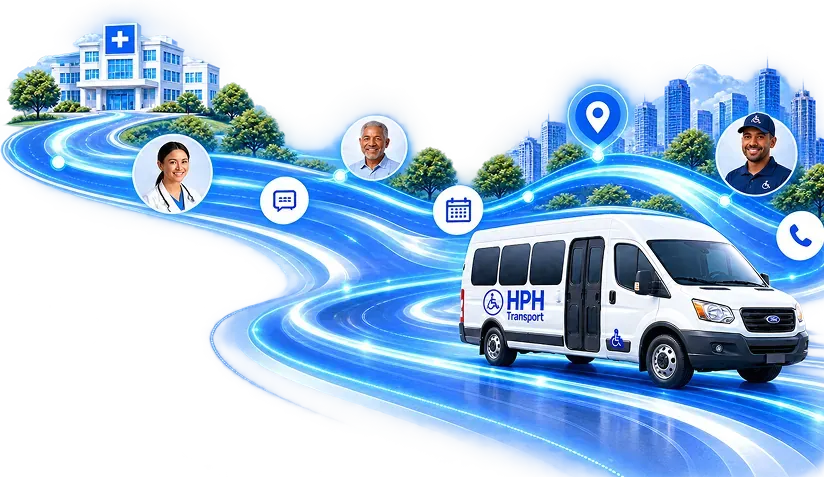
Patient Assistance

Training focused on appropriate patient assistance, sensitivity, and mobility needs.
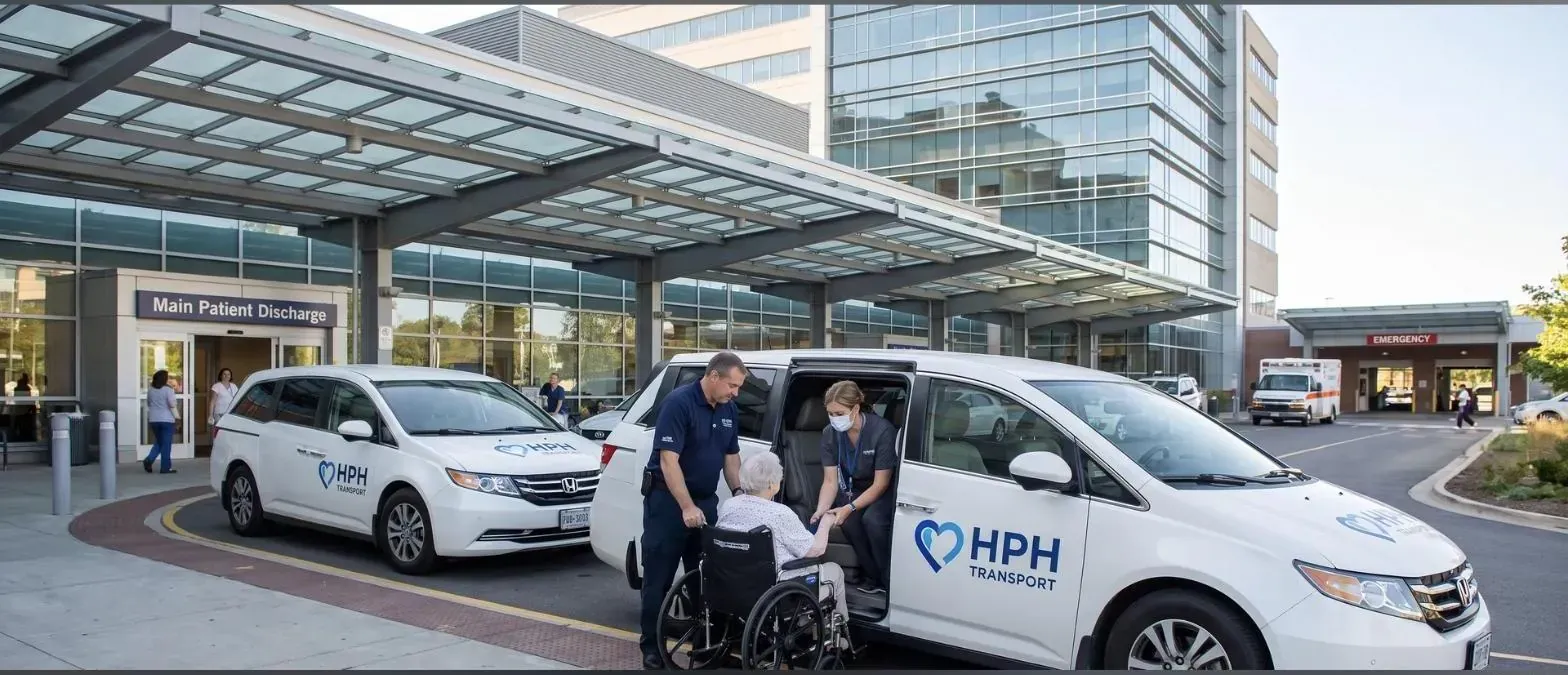
Healthcare Transportation Requires More Than a Ride
Healthcare Transportation requires more than simply getting a patient from one location to another. Patients may have mobility limitations, be recovering from treatment, or be experiencing a stressful point in their healthcare journey.
Our drivers understand that patient transportation is different from an everyday ride. Safety extends from the moment a driver arrives for pickup through the patient’s arrival at their destination.
At HPH Transport, we prepare our drivers for these responsibilities through healthcare-focused training, defensive driving, patient assistance, wheelchair safety, passenger securement, HIPAA awareness, professional conduct, and ongoing safety education.
Every HPH driver completes a comprehensive onboarding and training process before transporting patients.
Training focused on appropriate patient assistance, sensitivity, and mobility needs.

Training covering wheelchair safety, passenger securement, and accessibility awareness.

Training focused on safe driving practices, accident prevention, and situational awareness.

Training focused on confidentiality and appropriate handling of patient information.

Drivers are prepared to communicate professionally and interact respectfully with patients and healthcare teams.

Training includes applicable emergency procedures, incident response, and de-escalation.

Because HPH drivers work directly with healthcare populations, protecting patient privacy is an important part of our training.
Drivers receive HIPAA and patient privacy training focused on maintaining confidentiality and handling patient information appropriately within their transportation role.
Request a ProposalHPH doesn't build its programs around finding a different available driver for every ride. We work to consistently assign transportation professionals to client programs. Over time, drivers become familiar with:

Entrances, discharge areas, treatment centers, pickup points, and approved destinations.

Transportation workflows, communication expectations, and client-specific requirements.
Recurring appointments, treatment programs, discharge patterns, and transportation demand.

The general assistance and accessibility needs associated with the program they serve.
A safe transportation program considers what happens before, during, and after the ride.
Drivers follow established pickup procedures, confirm transportation requirements, and prepare the appropriate vehicle.
Patients receive appropriate time and non-clinical assistance based on their transportation needs.
Drivers follow safe-driving practices while maintaining a professional and respectful environment.
Drivers follow established drop-off procedures and provide appropriate non-clinical assistance based on program requirements.
HPH drivers receive healthcare-focused training covering patient assistance, wheelchair safety, defensive driving, privacy, professional conduct, situational awareness, and applicable emergency procedures.
Quarterly safety training and ongoing coaching reinforce safe practices and program expectations.
Training covers confidentiality and appropriate handling of patient information.
Training covers wheelchair safety, passenger securement, and accessibility awareness. Accessible transportation can be included for passengers using wheelchairs, walkers, and other mobility devices.
No. HPH offers non-emergency transportation. Drivers assist patients but do not replace clinical staff.