
Recurring Transport

Schedules for patients needing regular treatment, based on appointment patterns.
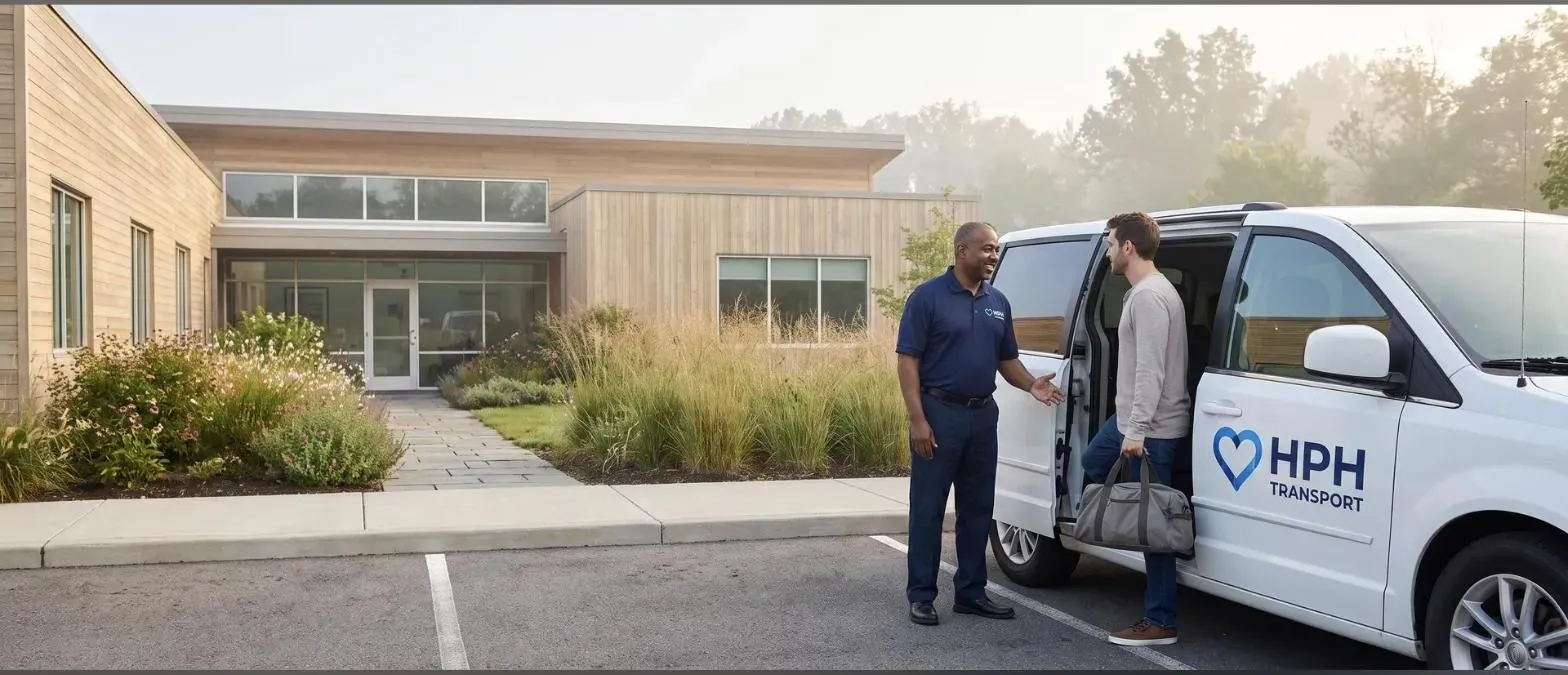
Reliable Transportation Across the Treatment and Recovery Journey
Addiction treatment and recovery programs may require patients to travel frequently for scheduled treatment, outpatient services, admissions, and transitions between approved care settings.
HPH builds dedicated transportation programs around recurring treatment schedules, facility procedures, patient needs, approved destinations, and changing daily demand.
For treatment centers managing frequent attendance and multiple stages of care, HPH builds transportation around the program rather than requiring staff to coordinate every trip individually.
Schedules for patients needing regular treatment, based on appointment patterns.

Coordinate non-emergency transportation for patients entering approved addiction treatment.

Transportation supports outpatient recovery and ongoing program needs.

Non-emergency transportation between approved facilities, recovery programs, and discharge destinations across stages of care.

Facility teams coordinate directly with HPH as schedules and changes. Assigned drivers learn routes, procedures, and expectations.

Dependable transportation helps address a practical barrier for patients who need to return regularly for treatment and recovery services.

HPH manages drivers, schedules, transportation communication, and day-to-day changes so staff spend less time arranging individual rides.

Recurring transportation helps patients remain connected to treatment, recovery services, and follow-up care over time.

A defined transportation process gives treatment teams a coordinated option when patients need non-emergency transportation into an approved program.

Direct coordination can help treatment teams manage transportation between approved care settings without rebuilding the transportation process for each transition.
Review treatment schedules, transportation demand, admission patterns, destinations, service areas, and accessibility needs.
Define drivers, vehicles, schedules, routes, pickup procedures, communication workflows, and transportation requirements.
Assign transportation resources, establish coordination with the treatment team, and begin operations.
Review activity, schedules, routes, staffing, vehicle utilization, and changing demand to evolve the program.
Programs can support planned admissions, recurring outpatient treatment, recovery programs, follow-up care, appropriate non-emergency care transitions, and discharges to approved destinations.
Recurring transportation can be scheduled around regular treatment and appointment patterns for patients who need to return several times each week.
Programs can coordinate non-emergency transportation for patients entering approved addiction treatment.
Non-emergency transportation can support movement between approved facilities, recovery programs, and discharge destinations across stages of care.
Facility teams coordinate directly with HPH when schedules, patient readiness, or transportation needs change.
One program can support planned admissions, recurring outpatient treatment, recovery programs, follow-up care, and transitions between approved care settings included in the client program.