
IOP & PHP Transport

Arrange transport for IOP and PHP, scheduling for patients attending multiple days.
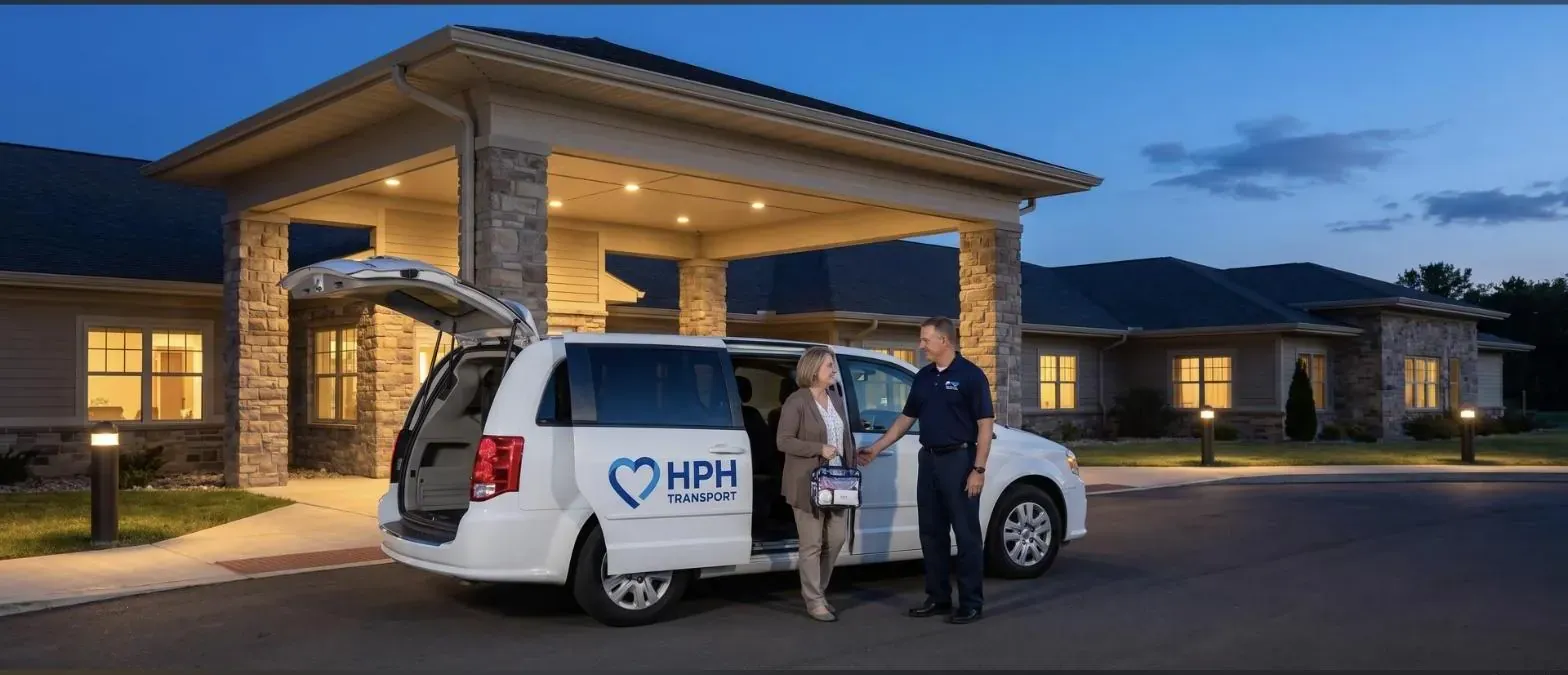
Keep Transportation From Interrupting the Treatment Plan
Behavioral health facilities coordinate transportation across recurring IOP and PHP treatment, planned admissions, approved placements, facility transfers, recovery programs, and discharges. HPH builds dedicated transportation programs around treatment schedules, facility procedures, patient needs, care transitions, and changing daily operations.
For behavioral health facilities managing recurring treatment and frequent care transitions, HPH builds transportation around the program rather than requiring staff to arrange disconnected rides.
Arrange transport for IOP and PHP, scheduling for patients attending multiple days.

Coordinate admissions, placements, non-emergency transfers, and discharges as patients move between care settings.

Transportation professionals know locations, procedures, routes, schedules, contacts, and expectations.

Transportation can be organized around treatment, recovery, admissions, transfers, discharges, and patient-ready times.

Facility teams communicate with HPH when patient readiness or transportation needs change, while GPS monitoring aids visibility.

Support timely patient discharges with transportation coordinated around facility procedures, patient readiness, and approved destinations.

Dependable transportation supports patients participating in recurring IOP, PHP, recovery, and outpatient behavioral health programs.

Consistent drivers, established pickup procedures, and recurring routes can make transportation more predictable for patients traveling several times each week.

HPH manages drivers, vehicles, schedules, coverage, and day-to-day transportation coordination so facility teams spend less time arranging individual rides.

Transportation resources can adjust around changing patient volume, treatment schedules, operating hours, routes, facilities, and program needs.

Coordinated transportation can support admissions, approved placements, transfers, and discharges when transportation might otherwise create an unnecessary delay.
Review patient volume, treatment schedules, transportation needs, service areas, and current challenges.
Define driver coverage, vehicle schedules, routes, communication procedures, and transportation workflows.
Assign drivers and vehicles, establish coordination with facility teams, and begin operations.
Review transportation activity, demand, staffing, routes, and vehicle utilization to evolve with the facility.
Programs can support recurring IOP and PHP treatment, outpatient behavioral health services, recovery programs, planned admissions, approved placements, appropriate non-emergency facility transfers, and discharges.
Transportation can be arranged around IOP and PHP schedules for patients attending multiple days each week.
Programs can coordinate non-emergency transportation for admissions, approved placements, and movement between care settings included in the client program.
Facility teams communicate with HPH when patient readiness, destinations, or transportation needs change.
Transportation can be organized so drivers learn facility locations, procedures, routes, schedules, contacts, and expectations.
One program can support recurring IOP and PHP treatment, outpatient behavioral health services, recovery programs, planned admissions, approved placements, appropriate non-emergency transfers, and discharges included in the client program.