
Infusion Transportation

Transportation can be coordinated around scheduled infusion appointments and patient-ready times that may differ from the original expected completion time.
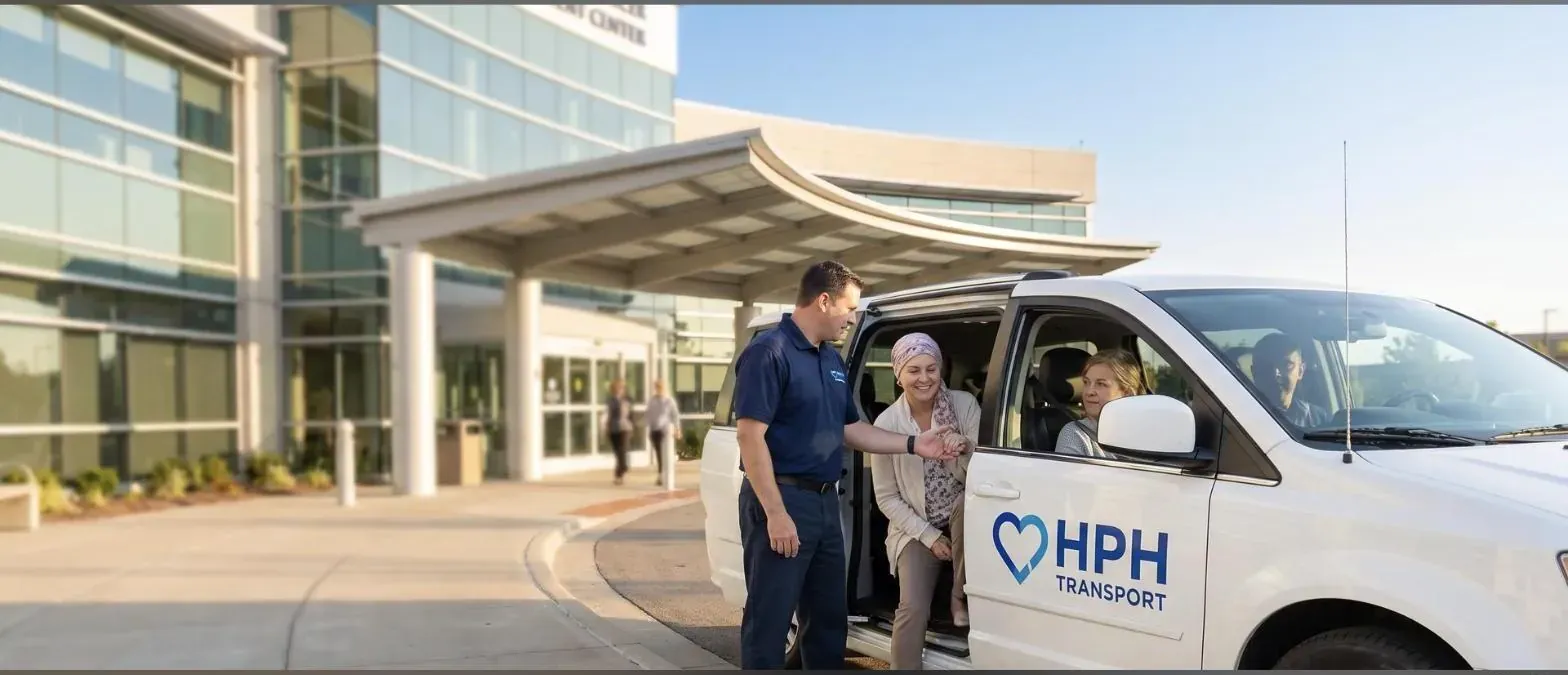
Reliable Transportation for Repeated Cancer Care
Cancer care can require patients to return frequently for radiation, infusion, diagnostic services, and follow-up appointments—sometimes several times over the course of a treatment plan. Transportation schedules help patients attend radiation appointments. A 2025 study found 21.7% of cancer programs cited transportation as a reason for missed treatments.
HPH builds dedicated transportation programs around recurring treatment schedules, changing patient-ready times, mobility needs, and cancer center operations.
For cancer centers managing recurring appointments and treatment days that do not always end at a predictable time, HPH builds transportation around the care schedule rather than arranging each trip independently.
Transportation can be coordinated around scheduled infusion appointments and patient-ready times that may differ from the original expected completion time.

Programs can support approved transportation for diagnostic services, imaging-related appointments, follow-up visits, and other scheduled cancer care.

Defined return-trip procedures help cancer center teams communicate when a patient is ready.

Vehicles support patients with mobility devices. Assigned drivers know cancer center entrances and procedures.

Dependable transportation helps patients stay connected to recurring radiation, infusion, diagnostic, and follow-up care.

Standing schedules and coordinated transportation can help address transportation barriers that contribute to missed or delayed cancer care.

Defined return-trip procedures help transportation respond when patients are ready earlier or later than originally anticipated.

HPH manages drivers, schedules, patient transportation communication, and day-to-day changes so staff spend less time coordinating individual rides.

Familiar drivers, recurring schedules, established pickup procedures, and direct communication create greater predictability for patients making repeated trips for care.
Review treatment volumes, schedules, appointment patterns, mobility needs, and current transportation challenges.
Define drivers, vehicles, schedules, accessibility needs, communication workflows, and program capacity.
Assign resources, establish coordination with cancer center teams, and begin recurring operations.
Review activity, schedules, route demand, staffing, and vehicle use to adjust as needs change.
Programs can support radiation, infusion, diagnostic services, follow-up visits, recurring treatment, and other approved non-emergency cancer care appointments.
Transportation can be scheduled around recurring radiation appointments over the course of a treatment plan.
Defined return-trip procedures help cancer center teams communicate when a patient is ready, including when treatment ends earlier or later than expected.
Transportation can be coordinated around scheduled infusion appointments and patient-ready times that may differ from the original expected completion time.
Vehicles can support patients with mobility devices, and assigned drivers can learn cancer center entrances and procedures.
One program can support radiation, infusion, diagnostic services, follow-up visits, and other approved non-emergency cancer care appointments.