
Recurring Therapy Rides

Standing transportation schedules can support physical therapy, occupational therapy, rehabilitation, and other approved sessions that require patients to return regularly.
Reliable Transportation for Recurring Rehabilitation Care
Rehabilitation often depends on patients returning consistently for physical therapy, occupational therapy, and other rehabilitation services over an extended period.
HPH builds dedicated transportation programs around recurring therapy schedules, mobility requirements, changing appointment completion times, and rehabilitation center operations.
For rehabilitation centers managing repeated appointments and patients with different mobility needs, HPH builds transportation around the treatment schedule rather than coordinating each ride separately.
Standing transportation schedules can support physical therapy, occupational therapy, rehabilitation, and other approved sessions that require patients to return regularly.

Therapy sessions do not always end at the same time. Pickup and return procedures can be established around changing patient-ready times and rehabilitation workflows.

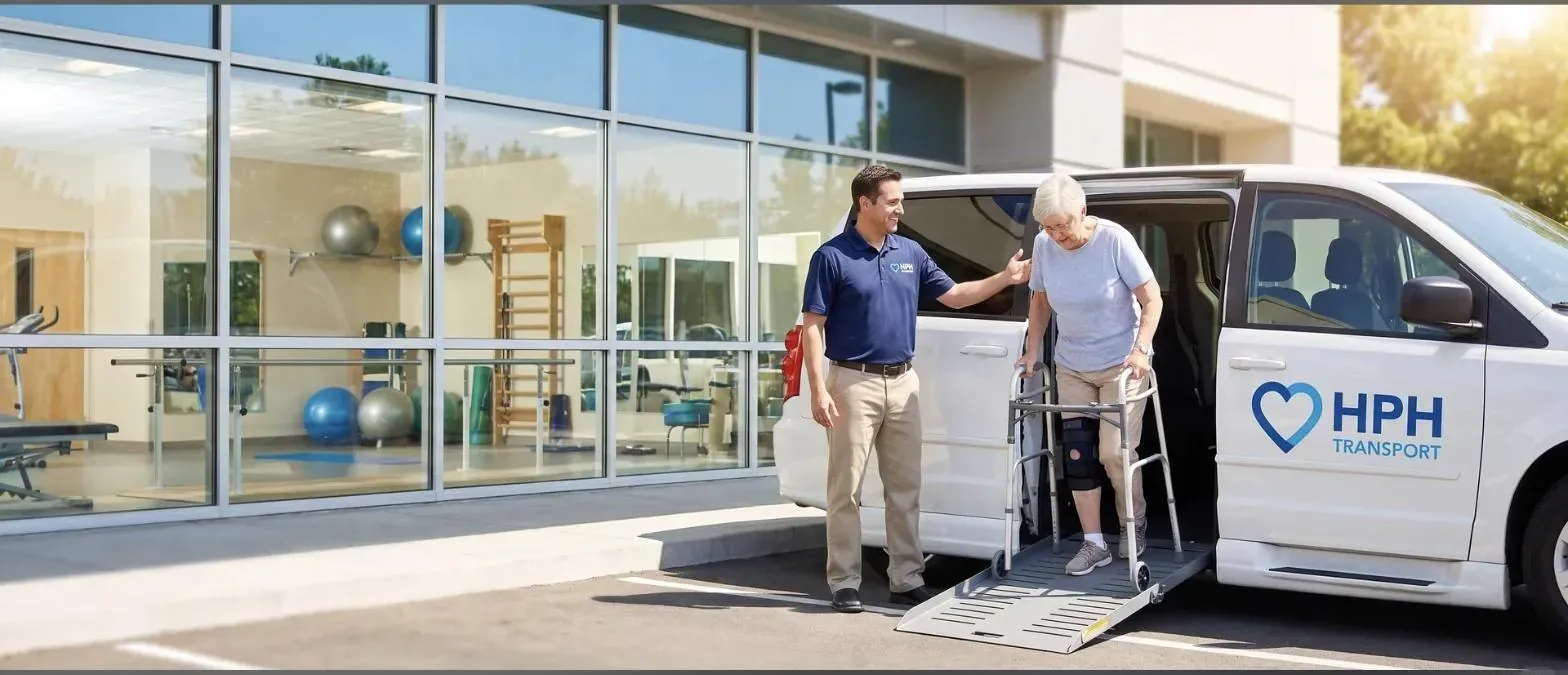
Vehicle options can support ambulatory patients as well as passengers using wheelchairs, walkers, and other mobility devices based on program requirements.

Assigned transportation professionals know entrances, pickup locations, patients, procedures, and expectations.

Rehabilitation teams communicate directly with HPH when appointments, patient readiness, transportation requirements, or return times change.

HPH manages drivers, schedules, transportation communication, and day-to-day changes so rehabilitation teams spend less time arranging individual rides.

Established return-trip procedures give rehabilitation teams a defined process when therapy sessions run shorter or longer than expected.

Structured transportation can help address transportation barriers that contribute to missed or late rehabilitation visits.

Dependable transportation helps patients maintain recurring rehabilitation and follow-up schedules over the course of treatment.

Transportation can be configured around the mobility and accessibility requirements of the patients included in the program.
Review therapy volume, schedules, mobility needs, pickup locations, return-trip patterns, and current challenges.
Define drivers, vehicles, schedules, accessibility needs, return-trip procedures, and communication workflows.
Assign resources, establish coordination with the rehab team, and begin operations.
Review activity, demand, return-trip timing, vehicle utilization, and patient needs to adjust as demand changes.
Programs can support physical therapy, occupational therapy, rehabilitation, post-acute appointments, follow-up care, and other approved non-emergency healthcare services.
Standing transportation schedules can support physical therapy, occupational therapy, and other approved sessions for patients who need to return regularly, including several times each week.
Therapy sessions do not always end at the same time. Pickup and return procedures can be established around changing patient-ready times, and rehabilitation teams can contact HPH when return times change.
Vehicle options can support ambulatory patients as well as passengers using wheelchairs, walkers, and other mobility devices when accessible transportation is included in the program.
A program can be designed around pickup locations, return-trip procedures, and multiple rehabilitation locations included in the client program.