
Discharge Transportation

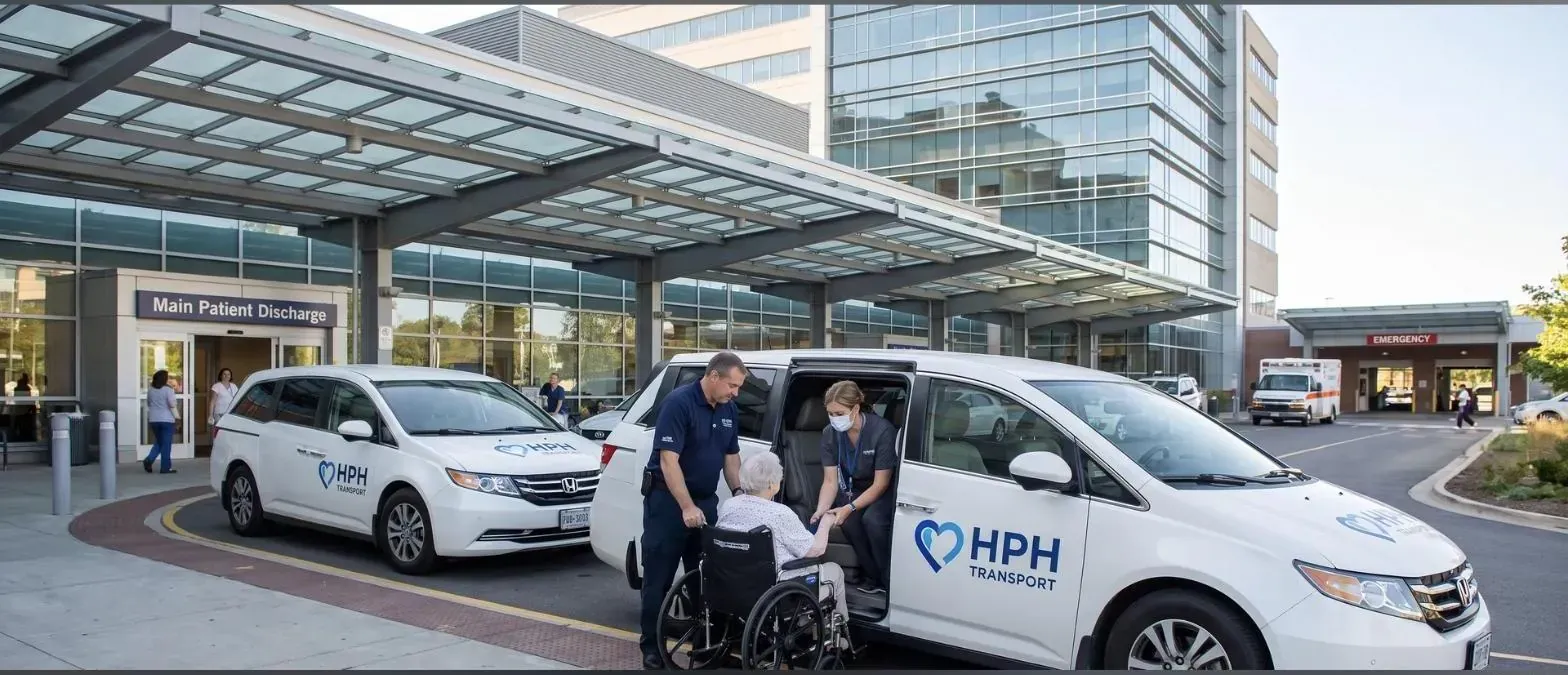
When a patient is ready to leave but lacks transportation, departure may be delayed. HPH coordinates non-emergency transport based on patient needs and daily demand.
Transportation Built Around Hospital Operations
A patient can be ready for discharge, scheduled for follow-up care, or approved for transfer—and transportation can still determine whether the next step happens on time.
HPH builds dedicated patient transportation programs around hospital workflows, patient-ready times, appointment schedules, accessibility requirements, and daily transportation demand.
HPH coordinates transportation around the areas where it can directly affect hospital operations—from patient discharge and outpatient access to non-emergency transfers and changing daily transportation needs.
When a patient is ready to leave but lacks transportation, departure may be delayed. HPH coordinates non-emergency transport based on patient needs and daily demand.

Arrange transport for specialty appointments, rehabilitation, and follow-up services. Scheduled transport can align with appointment patterns.

Facilitate non-emergency transport between hospitals and approved healthcare facilities. Coordination aids hospital teams in managing changing patient destinations.

Assigned transportation professionals know hospital entrances, pickup locations, staff contacts, and schedules.

Hospital teams notify HPH of changes in patient readiness or transport needs. GPS monitoring improves visibility and trip status responses.

HPH manages drivers, schedules, transportation communication, and day-to-day coordination so hospital staff spend less time arranging individual rides.

Familiar drivers, established procedures, and direct communication create a more predictable transportation process for patients and hospital teams.

Reliable transportation helps patients reach outpatient appointments, rehabilitation, treatment, and other scheduled services after or between hospital encounters.

More coordinated departures can support broader hospital efforts to keep beds, rooms, and patient flow moving.

A defined discharge transportation process can help keep transportation from becoming the final avoidable delay after a patient is ready to leave.
Review transportation volume, discharge patterns, schedules, and challenges.
Define drivers, vehicles, schedules, coverage, and reporting for hospital operations.
Coordinate transportation resources with hospital teams for patient transport.
Adjust schedules, staffing, routes, and vehicle use as hospital demand changes.
Depending on the client program, HPH can support hospital discharges, outpatient appointments, recurring care, appropriate non-emergency patient transfers, and accessible transportation needs.
When a patient is ready to leave but lacks transportation, departure may be delayed. HPH coordinates non-emergency transport based on patient needs and daily demand.
Hospital teams notify HPH when patient readiness or transport needs change, so departure transportation can be adjusted around the hospital's daily demand.
Scheduled transport can be arranged for specialty appointments, rehabilitation, follow-up services, and other recurring outpatient care included in the client program.
Hospital teams notify HPH of changes in patient readiness, destinations, or transport needs. Assigned drivers learn hospital entrances, pickup locations, staff contacts, and schedules.
Accessible transportation can be included in the program for patients using wheelchairs, walkers, and other mobility devices.