
Dedicated Drivers

Consistently assigned drivers learn your locations, entrances, pickup procedures, and staff contacts.
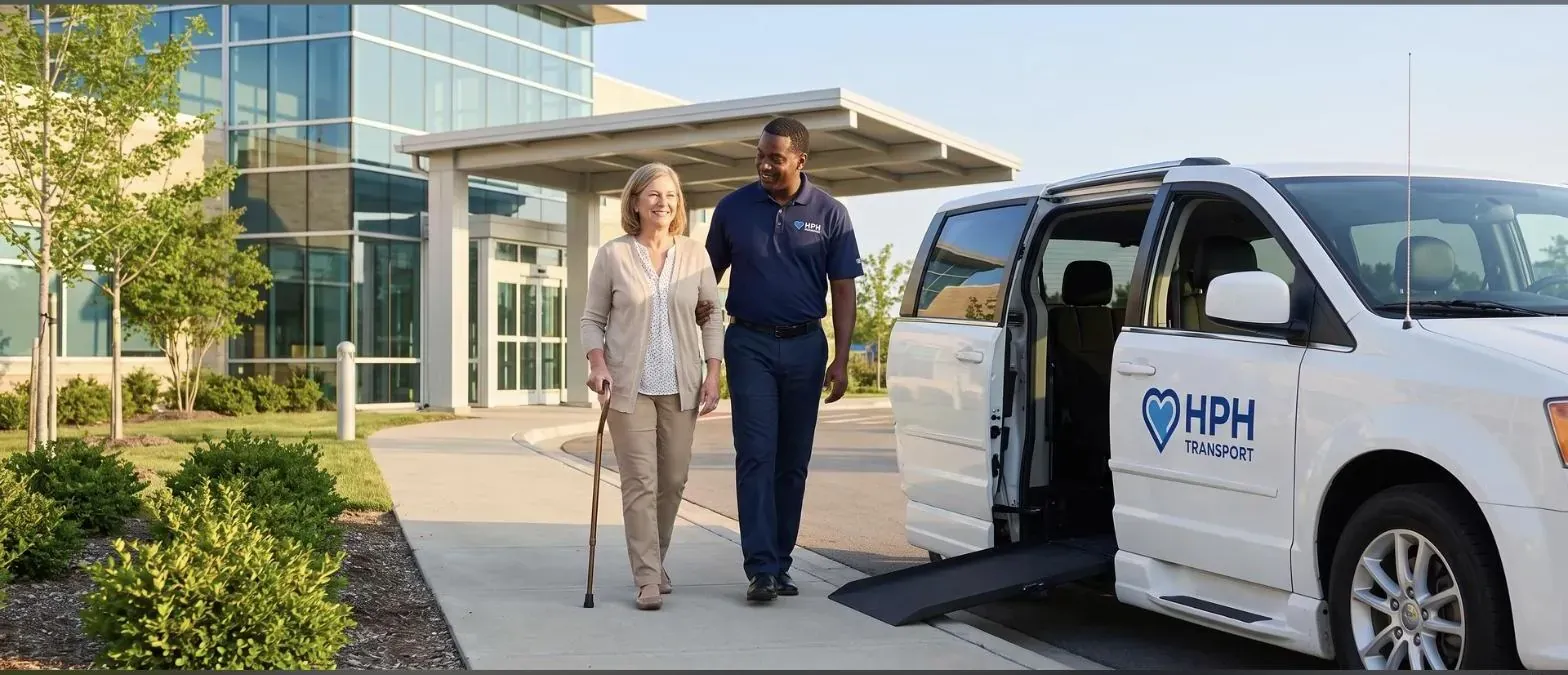
Dedicated Transportation for Scheduled Outpatient Care
Outpatient patients depend on reliable transportation to appointments, treatment, and follow-up visits. HPH builds dedicated transportation programs around your appointment schedules, patient volume, recurring care needs, and accessibility requirements.
HPH creates a defined transportation program around your outpatient operations instead of requiring staff to arrange each ride separately.
Consistently assigned drivers learn your locations, entrances, pickup procedures, and staff contacts.

Rides are organized around appointment times, recurring treatment, and clinic operating hours.

Vehicle options can support passengers with mobility and accessibility needs.

Care teams communicate directly with HPH when schedules or patient needs change.

HPH monitors active transportation to support greater operational visibility.

Transportation activity can be reviewed to help adjust the program over time.

Help patients reach appointments and treatment when transportation would otherwise make access more difficult.

Consistent transportation supports recurring treatment and follow-up visits.

HPH manages drivers, schedules, and day-to-day changes so staff spend less time arranging individual rides.

Dedicated drivers and established procedures make transportation more predictable for patients and staff.
Review outpatient locations, appointment patterns, patient volume, accessibility needs, and current transportation challenges.
Customize drivers, vehicles, schedules, routes, communication, and reporting.
Deploy transportation resources and establish operating procedures with your team.
Review transportation activity and adjust routes, schedules, staffing, and vehicle use as demand changes.
Depending on the client program, transportation can support clinic visits, treatment, therapy, screenings, follow-up appointments, and other approved non-emergency healthcare services.
Recurring transportation can be scheduled around standing appointment patterns, including treatment that happens weekly or on a repeating cadence.
Programs can be built around multiple facilities, routes, and pickup procedures.
Vehicle options can support passengers with mobility and accessibility needs, including wheelchairs, walkers, and other mobility devices.
HPH provides non-emergency transportation arranged through healthcare organizations for scheduled and recurring care.