
Accessible Vehicles

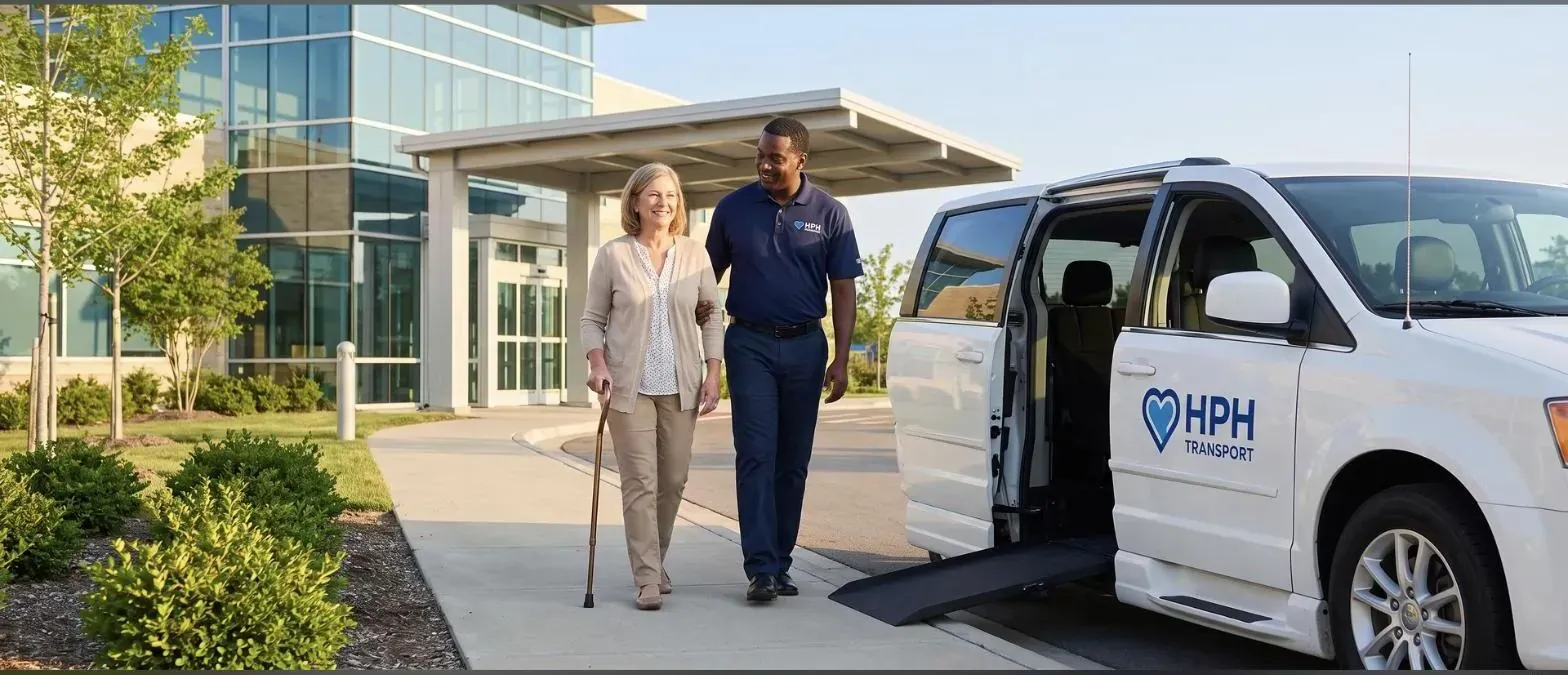
Transportation options can support ambulatory passengers, mobility aids, and passengers requiring wheelchair-accessible vehicles.
Dedicated Transportation Built Around Patient Care
HPH builds non-emergency medical transportation programs for hospitals, clinics, behavioral health providers, and other healthcare organizations.
Programs can support recurring treatment, outpatient appointments, rehabilitation, cancer care, behavioral health services, discharges, and follow-up care.
Transportation can support recurring appointments, standing schedules, and changing outpatient needs.
Transportation options can support ambulatory passengers, mobility aids, and passengers requiring wheelchair-accessible vehicles.

Healthcare teams communicate directly with HPH when appointments or transportation needs change.

Recurring and standing appointments can be built into the schedule. Same-day changes are coordinated according to available capacity.

Under an agreed workflow, HPH can support pickup communication, appointment reminders, and return-trip coordination.

Real-time GPS monitoring supports visibility into active transportation while your staff communicates directly with HPH.

Consistently assigned drivers learn your facilities, schedules, workflows, and staff contacts.

Help patients reach recurring treatment, outpatient care, rehabilitation, and follow-up appointments with ADA-accessible transportation options.

HPH manages transportation coordination so healthcare teams spend less time arranging individual rides.

Consistent transportation helps patients maintain dialysis, rehabilitation, cancer treatment, behavioral health services, and other recurring care.

Recurring schedules and patient communication help address transportation breakdowns that contribute to missed care.

Consistent drivers and established procedures create a more comfortable, predictable transportation experience for patients.
Review patient volume, appointment schedules, accessibility needs, service area, and transportation challenges.
Define drivers, vehicles, schedules, communication procedures, assistance requirements, and reporting needs.
Assign transportation resources and establish operating workflows with your team.
Review transportation activity and adjust schedules, staffing, routes, and vehicle use as demand changes.
Scheduling can be handled through a shared workflow, phone coordination, or integration with your existing systems. We can support recurring schedules, standing appointments, and same-day requests based on available capacity.
Each program is built around your facilities and the area your patients travel. Share your locations and service area, and HPH will recommend coverage for that program.
Vehicles are assigned around program volume, accessibility requirements, and service needs, including wheelchair-accessible options for passengers using wheelchairs, walkers, and other mobility devices.
Billing is arranged with your organization as part of the transportation program. Tell us how transportation is handled today, and HPH will recommend a program built around your operations.
Transportation is coordinated directly with your healthcare team around your facilities, schedules, workflows, and patient assistance requirements.
Programs are arranged through healthcare organizations for patients traveling to approved care, including recurring treatment, outpatient appointments, rehabilitation, discharges, and follow-up care.